top of page


Images below are AI visualisations of Harcombe Valley's future based on evidence of actual site destruction since 2022.


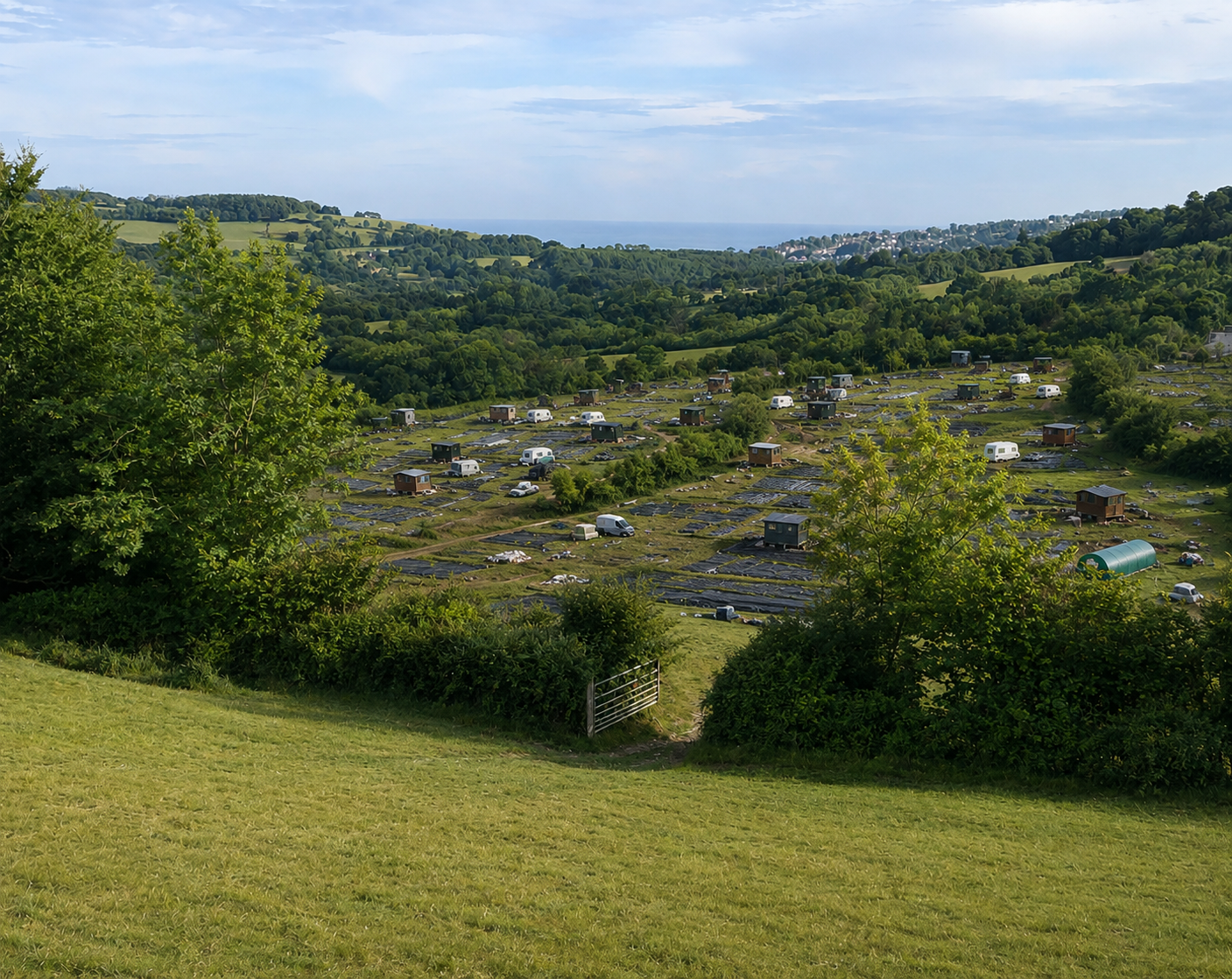
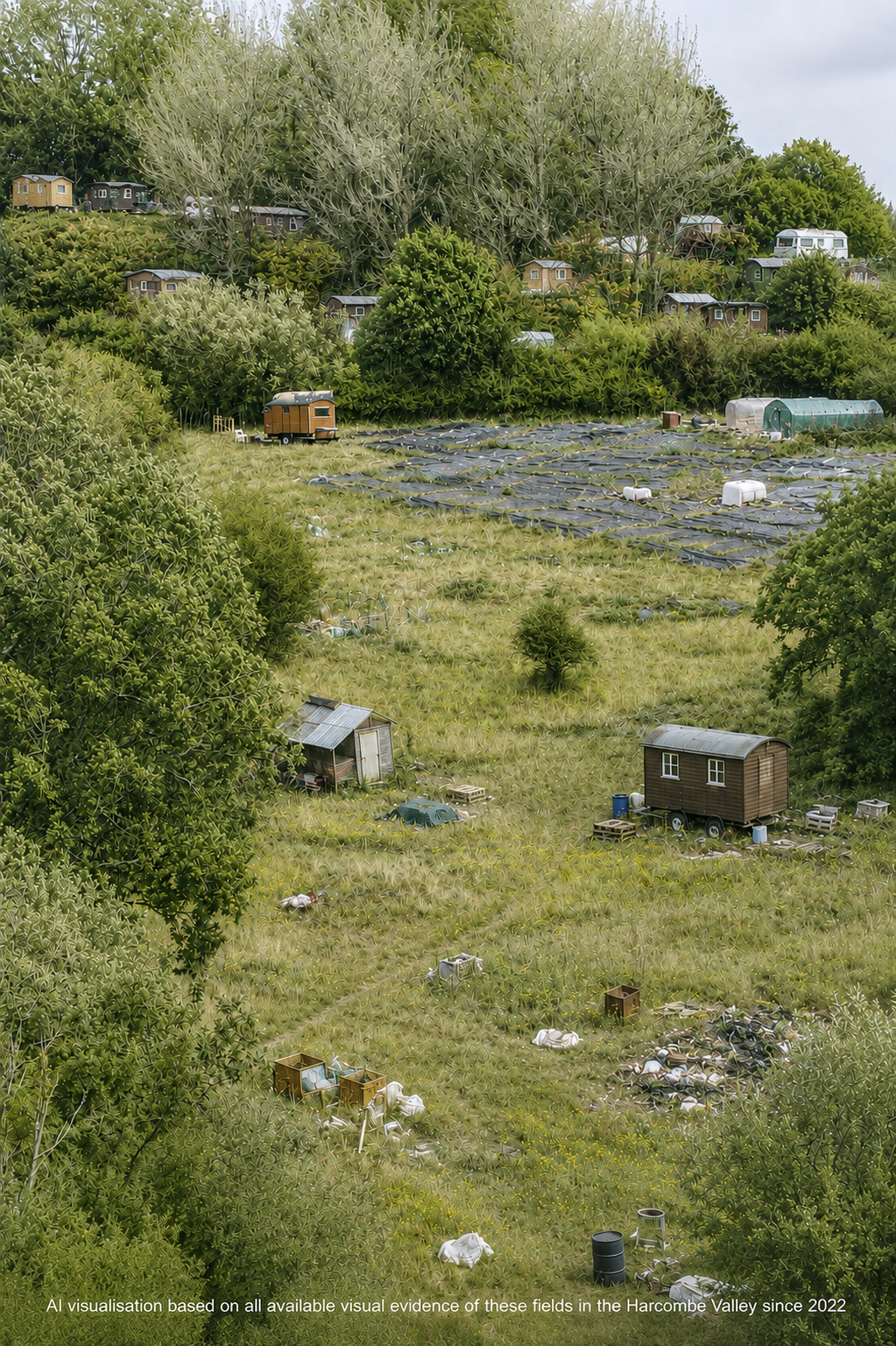
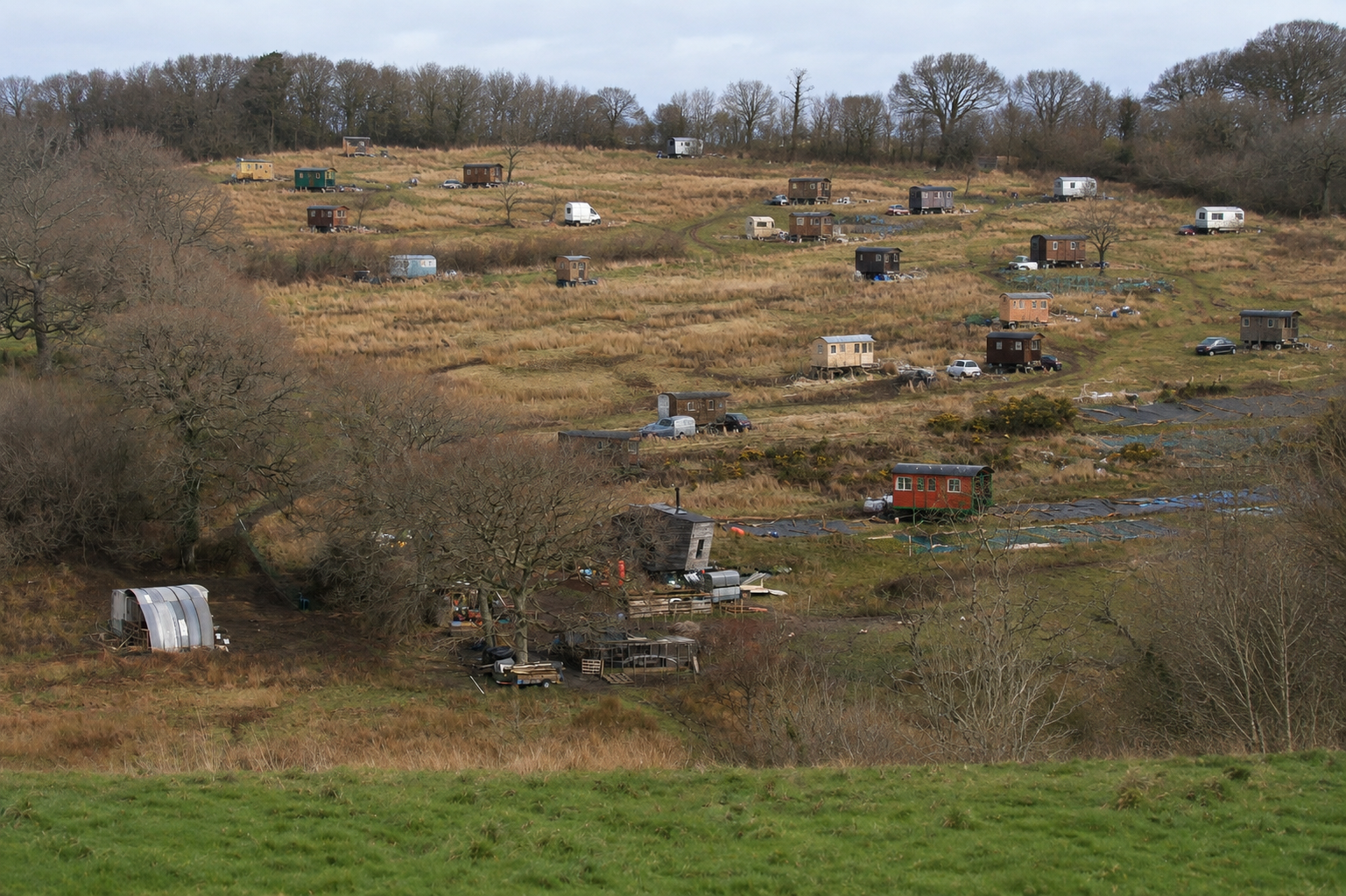
2023 legislation strengthened the duty on East Devon District Council from merely having regard to the National Landscape purpose to having to “seek to further” it.
Now, since August 2026, intentional unauthorised development must be given “substantial weight” in planning decisions. Together, these changes make the case for protecting Harcombe — and enforcing the Notices — stronger than ever.
THIS is what happens if East Devon District Council [EDDC] fails in it's duty…
-
LOSS OF A NATIONALLY PROTECTED LANDSCAPE — Harcombe lies within a National Landscape — the highest status of protection for landscape and scenic beauty in England. Forty tiny homes, with vehicles, tracks, parking, storage and infrastructure, would fundamentally alter these open fields. National planning policy requires great/substantial weight to be given to conserving protected landscape and scenic beauty
-
LOSS OF PROTECTED LANDSCAPE CHARACTER — residential plots, hardstanding, fencing, sheds, vehicles and domestic activity would replace Harcombe's agricultural character. The very qualities for which the landscape is nationally protected would be eroded.
-
CUMULATIVE HARM TO A PROTECTED LANDSCAPE — the impact is not one tiny home but potentially 40 homes across two fields, together with everything needed to live in them. Government planning guidance expressly says the cumulative impacts of development on landscape must be carefully considered.
-
INCREASED PRESSURE ON THE A35 TRUNK-ROAD ACCESS — 40 households could generate substantially more movements by residents, visitors, deliveries, servicing and waste collection. That is a fundamentally different intensity and pattern of traffic from use of an agricultural field gate.
-
LOSS OF TRANQUILLITY IN A NATIONALLY PROTECTED LANDSCAPE — traffic, deliveries, machinery, visitors, noise and everyday residential activity would intrude into Harcombe's quiet rural valley. Government Protected Landscapes guidance specifically identifies tranquillity as a quality relevant authorities should consider.
-
LOSS OF DARK SKIES IN A NATIONALLY PROTECTED LANDSCAPE — domestic lighting, security lights and headlights would introduce artificial light across undeveloped fields. Dark skies are also specifically identified in government Protected Landscapes guidance.
-
THREAT TO WILDLIFE AND ECOLOGICAL VALUE — lighting, traffic, noise, vegetation clearance and human activity would put additional pressure on Harcombe's hedgerows, woodland, watercourses and wildlife. Government guidance specifically requires authorities to consider the wildlife and ecological value of Protected Landscapes.
-
THREAT TO THE WATER ENVIRONMENT — 40 households would generate sewage and wastewater. Any untreated pollution entering Harcombe's springs or streams could be carried downstream towards the River Lim. The water environment is specifically identified as something authorities should consider when furthering the purposes of a Protected Landscape.
-
POTENTIALLY IRREVERSIBLE DAMAGE TO PROTECTED COUNTRYSIDE — tracks, hardstanding, soil compaction, drainage works, utilities and altered gateways can remain even when movable structures are removed. “Movable” does not necessarily mean reversible.
-
A PRECEDENT FOR FURTHER EROSION — once residential occupation, access and infrastructure become established, further incremental development becomes easier to absorb. Each small change makes the next less exceptional.
-
ULTIMATELY: FAILURE OF A STATUTORY PROTECTION — National Landscapes exist for the statutory purpose of conserving and enhancing natural beauty. Public authorities now have a strengthened legal duty to “seek to further” that purpose when exercising functions affecting them. If the Harcombe Valley is allowed to be progressively transformed, the designation may survive on the map while the landscape it was created to protect disappears on the ground.
No single cut destroys a protected landscape. It is the UNPREVENTED accumulation of them that does. Join us.
bottom of page